Keep the lifejacket label and local requirements together
Identify the actual garment and preserve current activity-specific official guidance without treating a checklist as approval.
Updated:
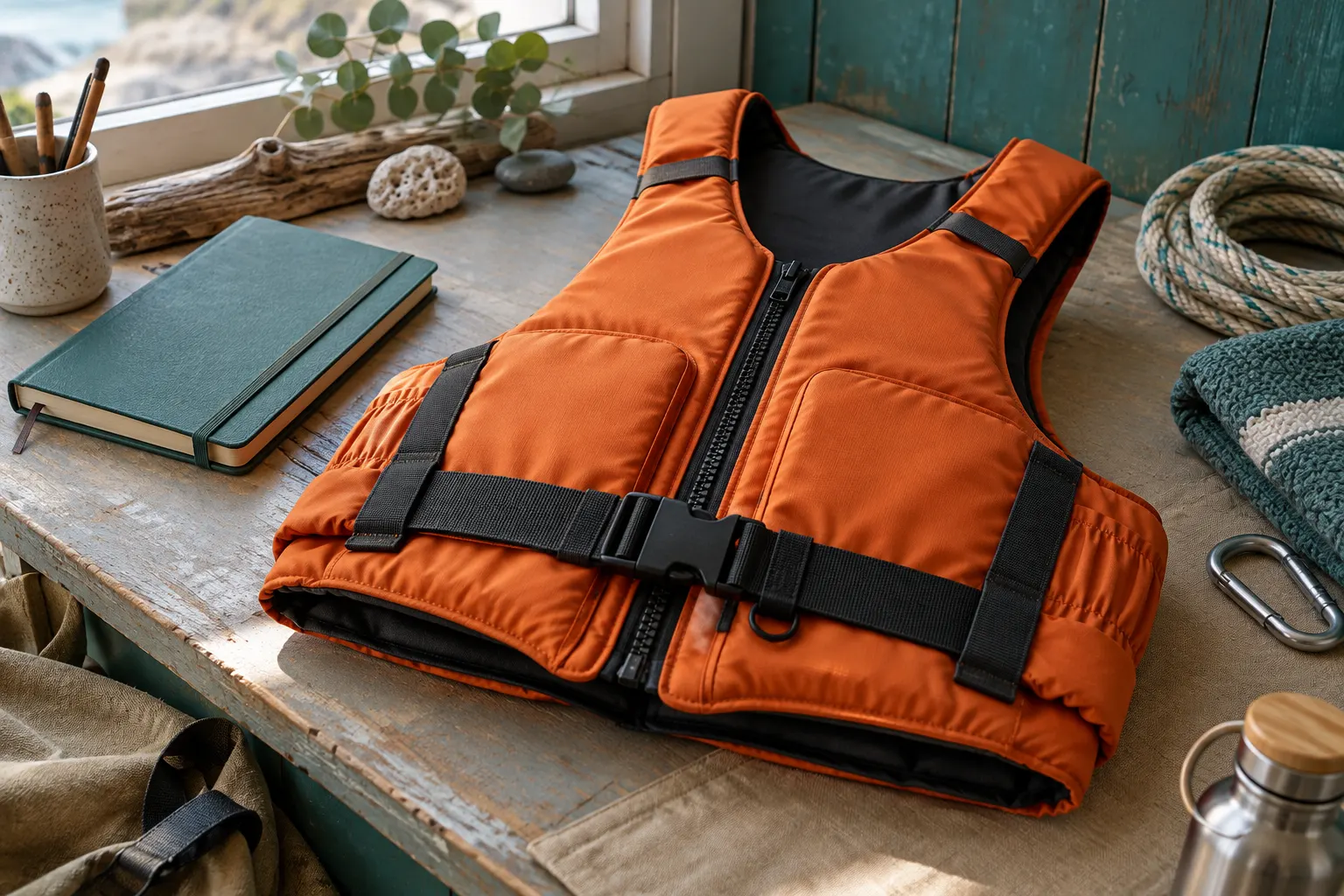
Identify the garment before comparing claims
A lifejacket record should identify the actual model and its label, applicable instructions and service history. A colour, photograph or generic online category cannot confirm approval, individual fit or suitability for an activity. Preserve the maker’s exact terms, size information and any stated standard without replacing them with an informal description. If the label is missing, unclear or inconsistent with the listing, seek clarification from the manufacturer or a qualified supplier before relying on the item. This journal supplies no buoyancy calculator or individual equipment selection. The useful task is to keep the evidence and unresolved questions together so the appropriate advice can address the actual garment and intended circumstances.
NSW recreational lifejacket guidance has activity-specific scope ? AMSA local equipment requirements and communication ?
Keep the jurisdiction and activity visible
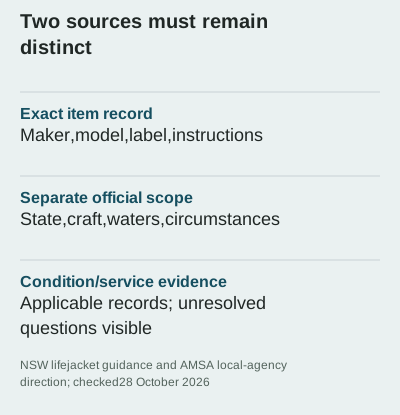
NSW’s official lifejacket guidance distinguishes craft, waters and circumstances in its compulsory-wear tables, including separate canoe and kayak contexts. It also recommends wearing a lifejacket throughout a trip. The guidance was checked on 28 October 2026 and must be read in full for the actual activity and location. Do not carry a table from another vessel class or AMSA’s domestic-commercial service categories into a recreational kayak decision. AMSA directs readers to their local marine-safety agency for equipment requirements. A saved link should therefore include its jurisdiction and scope, with a fresh check before use rather than an assumption that a national-looking page provides one universal recreational rule.
Separate documentation from an inspection outcome
Keep a copy or clear photograph of the identifying label, the instructions and any service documentation supplied for the exact item. Record visible condition concerns and unknown history without assigning a pass mark. This record does not set an acceptable wear threshold, inflation procedure, service interval or replacement date for an unidentified garment. Follow the applicable manufacturer and official requirements and obtain qualified assistance where condition, servicing or fit is uncertain. A seller’s claim that an item has never been used is a statement to preserve, not a substitute for the evidence needed to rely on it. Keep later professional findings distinct from your own observations.
Record storage space without making a fit claim
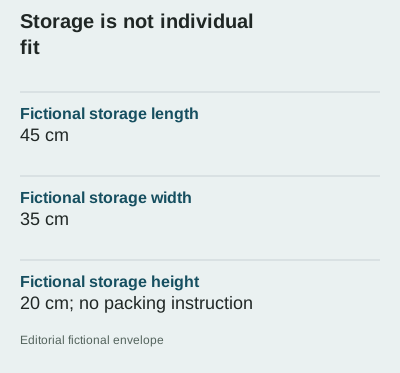
Storage dimensions are a practical purchase field, but they do not establish individual fit or acceptable compression. In a fictional inventory, an equipment storage envelope is recorded as 45 cm long, 35 cm wide and 20 cm high in the arrangement described by its owner. Those are not dimensions of a named lifejacket and do not prescribe folding, compressing or packing an inflatable device. Keep the relevant storage instructions beside the record. If a container or transport arrangement could affect the equipment, ask the manufacturer for applicable guidance. A dimensional worksheet must not override instructions or imply that fitting inside a bag means the item remains ready for use.
Keep a live question list with the purchase file
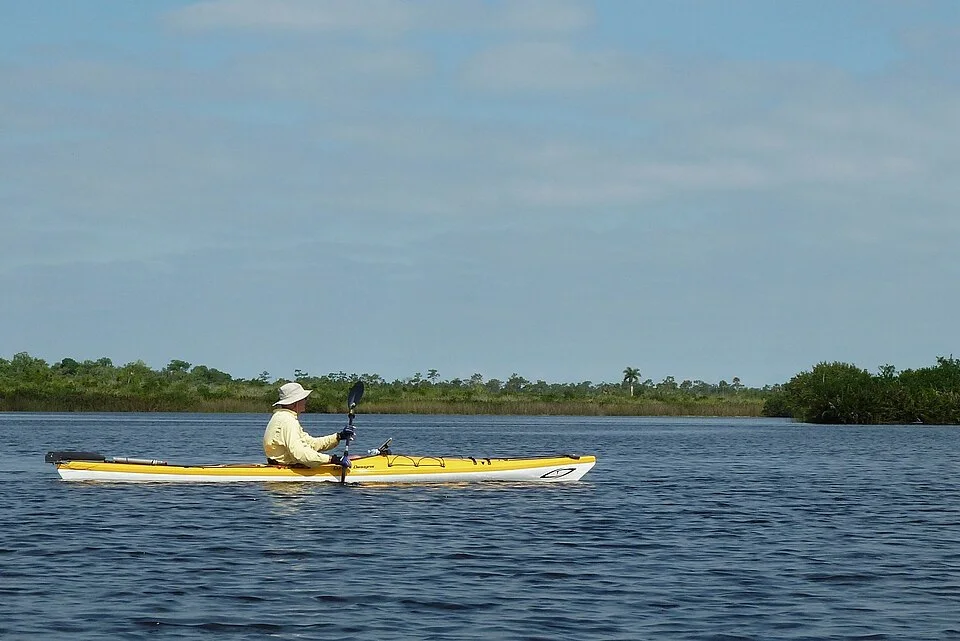
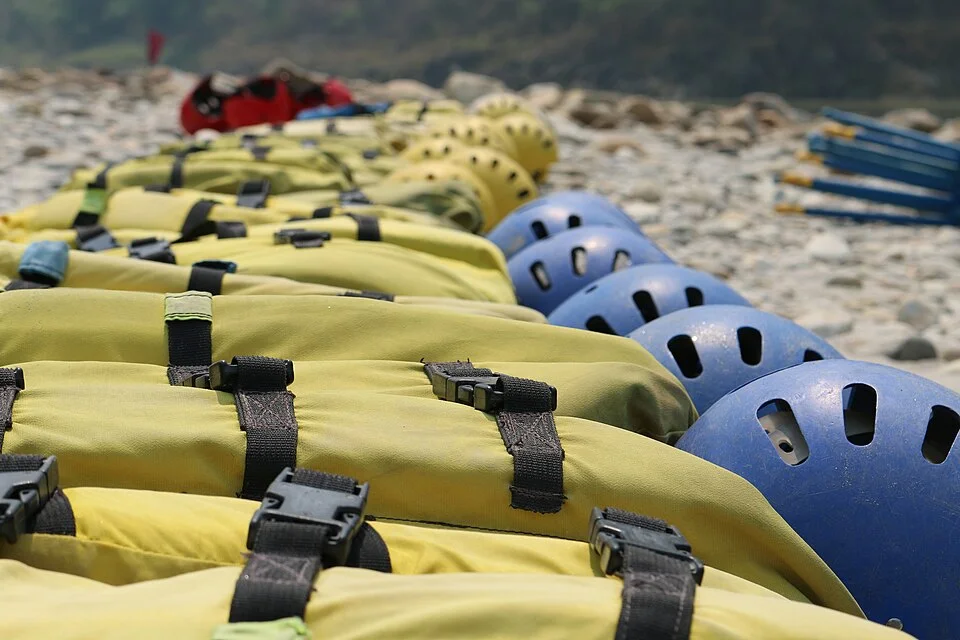
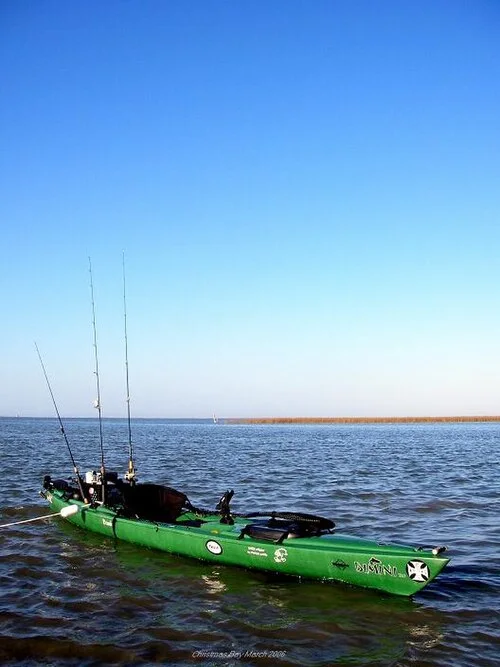
Before payment, ask the supplier to identify the model, applicable label, included instructions and available service record. Keep local official guidance as a separate source and resolve questions with the appropriate authority or qualified provider. The diagrams distinguish a documentation chain from fictional storage dimensions; neither certifies a garment, person or trip. The actual photograph of yellow garments and helmets is from an overseas rafting setting, not evidence of an Australian approval level or an equipment recommendation. The paddling photograph likewise does not demonstrate compliance or suitable conditions. Save the dated sources and revisit them when the activity, jurisdiction, people, equipment or rules change, instead of carrying forward an old checklist as permanent approval.
Open official source ? Open official source ?