Keep a trip record beside the current official forecast
Save the forecast source, retrieval time and contact arrangement while leaving launch suitability to current conditions and appropriate advice.
Updated:
A saved record is not a current forecast
Keep a trip record beside the current official forecast, not in place of it. Record the source, forecast area, issue time and when you retrieved it, together with the planned activity and location. AMSA advises checking weather and ocean conditions and postponing when conditions are unsuitable. Its guidance was checked on 28 October 2026; this article supplies no live forecast or numerical safe-weather threshold. A screenshot from a previous outing must remain historical. Before acting, consult the current relevant official information and obtain appropriate advice for the people, craft, location and conditions. An equipment purchase or a completed worksheet cannot decide whether a launch is suitable.
AMSA general marine trip preparation ? AMSA local equipment requirements and communication ?
Preserve the time and location context
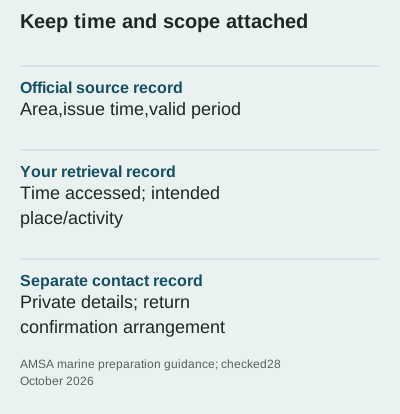
Forecasts describe a particular area and period. Keep those labels visible rather than copying an attractive icon or one number into a packing note. Distinguish the source’s issue time from your retrieval time and your intended trip period. If the document does not address the exact location or activity, mark that gap and seek the applicable source. Do not extrapolate a benign-looking forecast for one stretch of water into a claim about another. The record can also note where you will obtain updated information, but it should not impose a universal refresh interval. Conditions and official instructions determine what needs attention, not a fixed timer invented by this journal.
Keep the contact arrangement separate from equipment weight
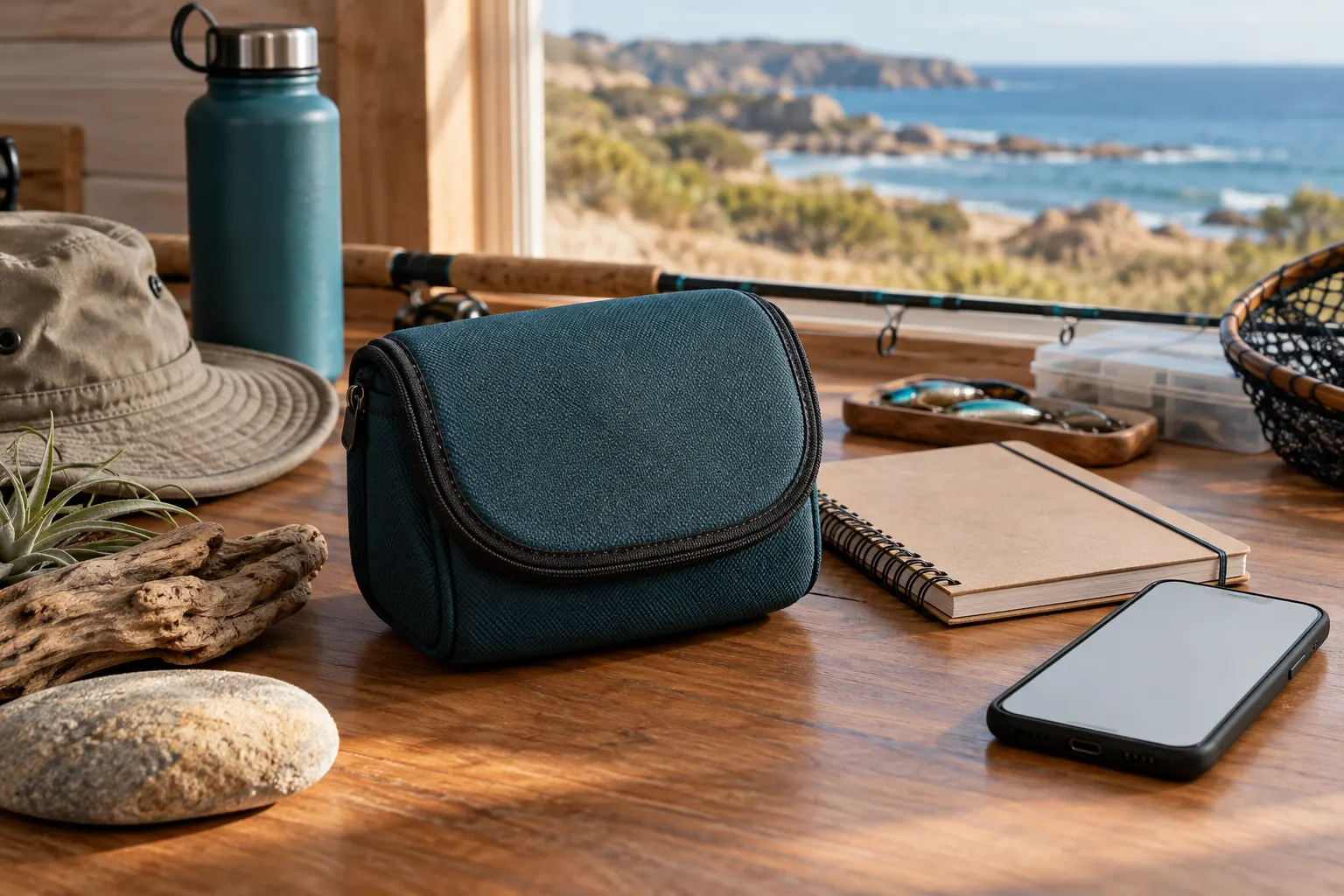
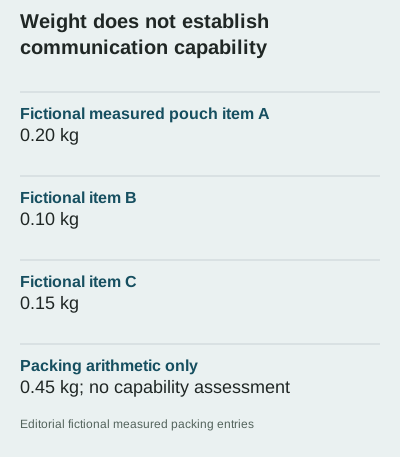
AMSA recommends sharing trip details and an approximate return time with an emergency contact, then confirming return. Preserve the arrangement privately and follow applicable official guidance; this site does not supply an emergency-response protocol. A packing inventory may sit beside it as a separate record. For example, fictional measured pouch entries of 0.20 kg, 0.10 kg and 0.15 kg total 0.45 kg. Those figures do not identify required communication equipment, prove battery life or establish reception. Keep any actual devices and their applicable instructions in the equipment file. A total weight cannot show that a contact can reach you or that a particular communication setup meets local requirements.
Do not rely on one device claim
AMSA cautions against relying on a mobile phone as the sole means of communication on the water and directs readers to local marine-safety agencies for equipment requirements. Read the applicable official guidance for the actual place and craft. This article does not decide which radio, beacon or other equipment is sufficient, or whether a device works at a location. Record exact equipment identities, current instructions and unresolved questions for the appropriate authority or qualified provider. A waterproof case label does not establish coverage or emergency capability, and a full-looking battery icon is not a tested operating duration. Preserve those distinctions rather than allowing the presence of a phone in a photograph to stand in for a communication plan.
Keep the historical record without reusing its conclusions
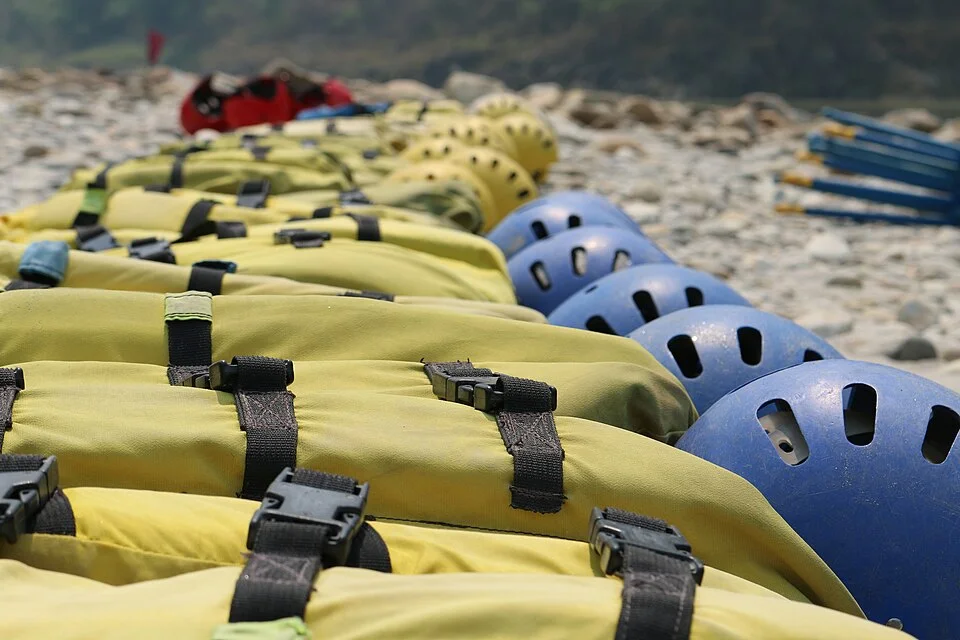
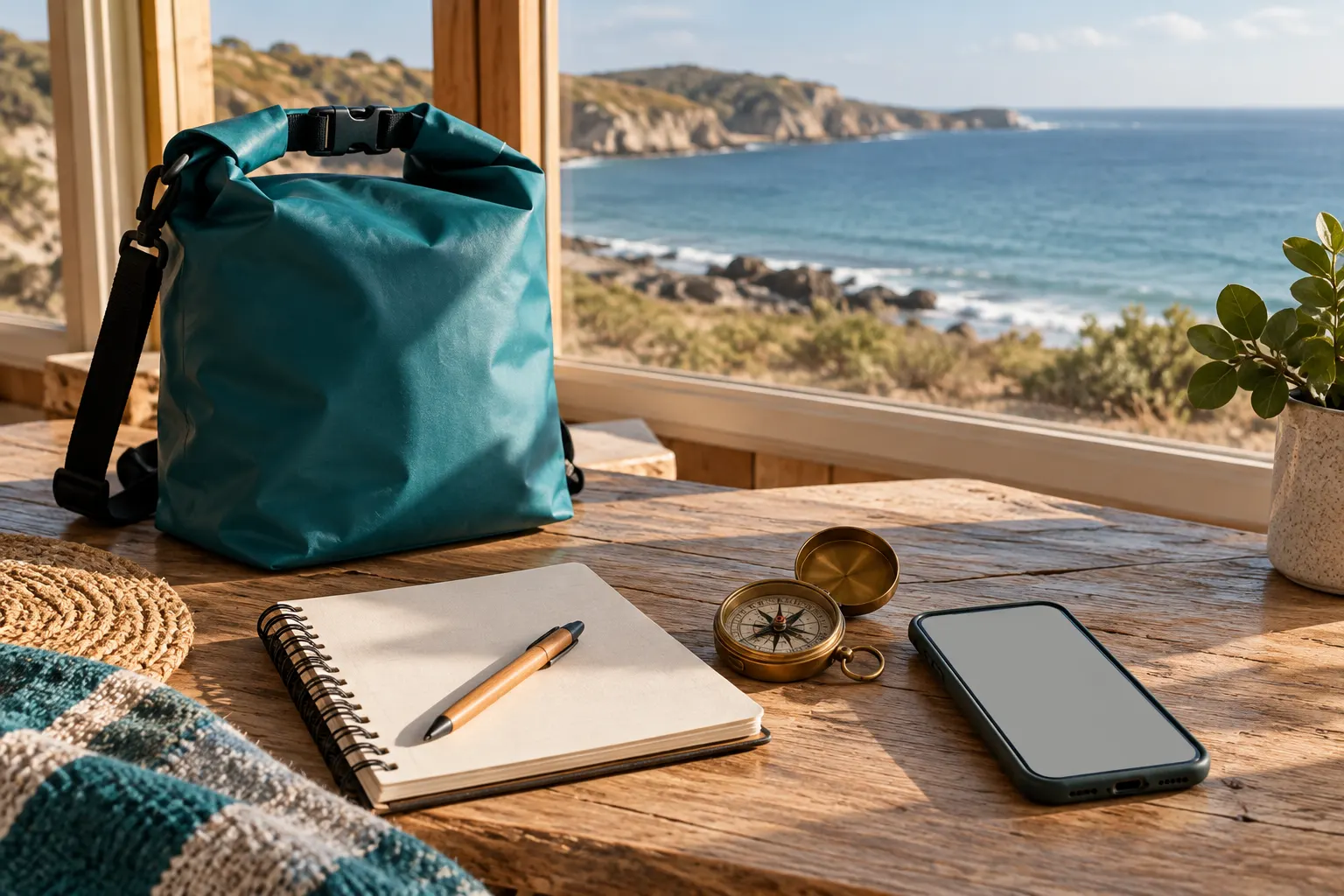
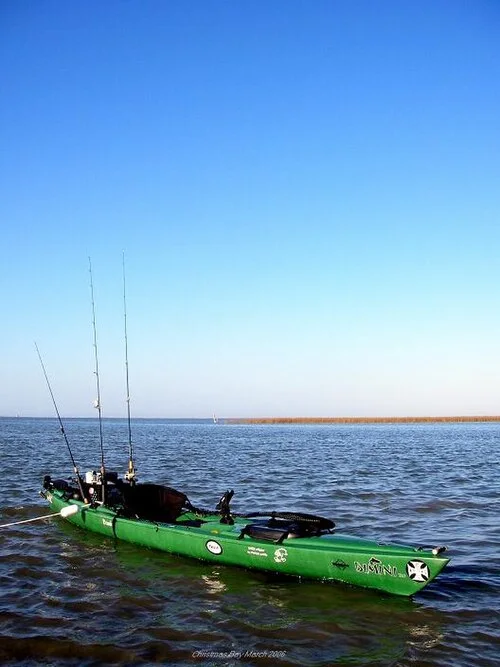
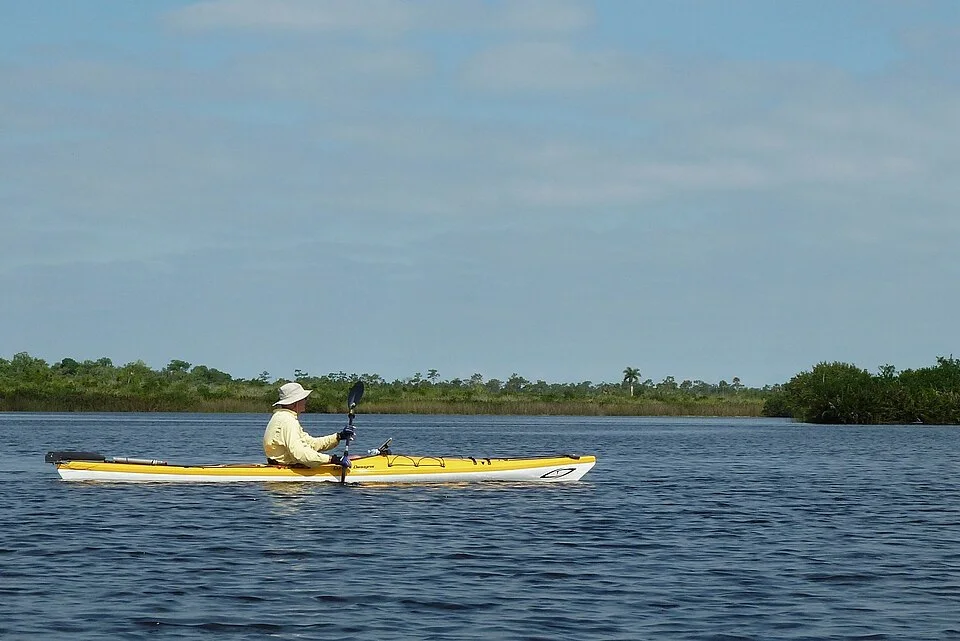
After an outing, retain the dated record as history and mark any observations as observations rather than a forecast evaluation. Do not reuse its decision for a later trip simply because the destination is the same. Update the intended details and consult current official sources again. The diagrams show a source-time chain and fictional packing arithmetic only, not thresholds or an operating recommendation. The actual paddling image is contextual and establishes neither suitable conditions nor compliant equipment. Our conceptual cover likewise contains no live forecast. The useful outcome is a traceable record of what source you consulted and what remains uncertain, with current suitability questions directed to the appropriate guidance and advice.
Open official source ? Open official source ?