Dry bag litres do not describe the whole packing shape
Compare nominal volume with rolled height, base shape and the actual items you intend to pack.
Updated:
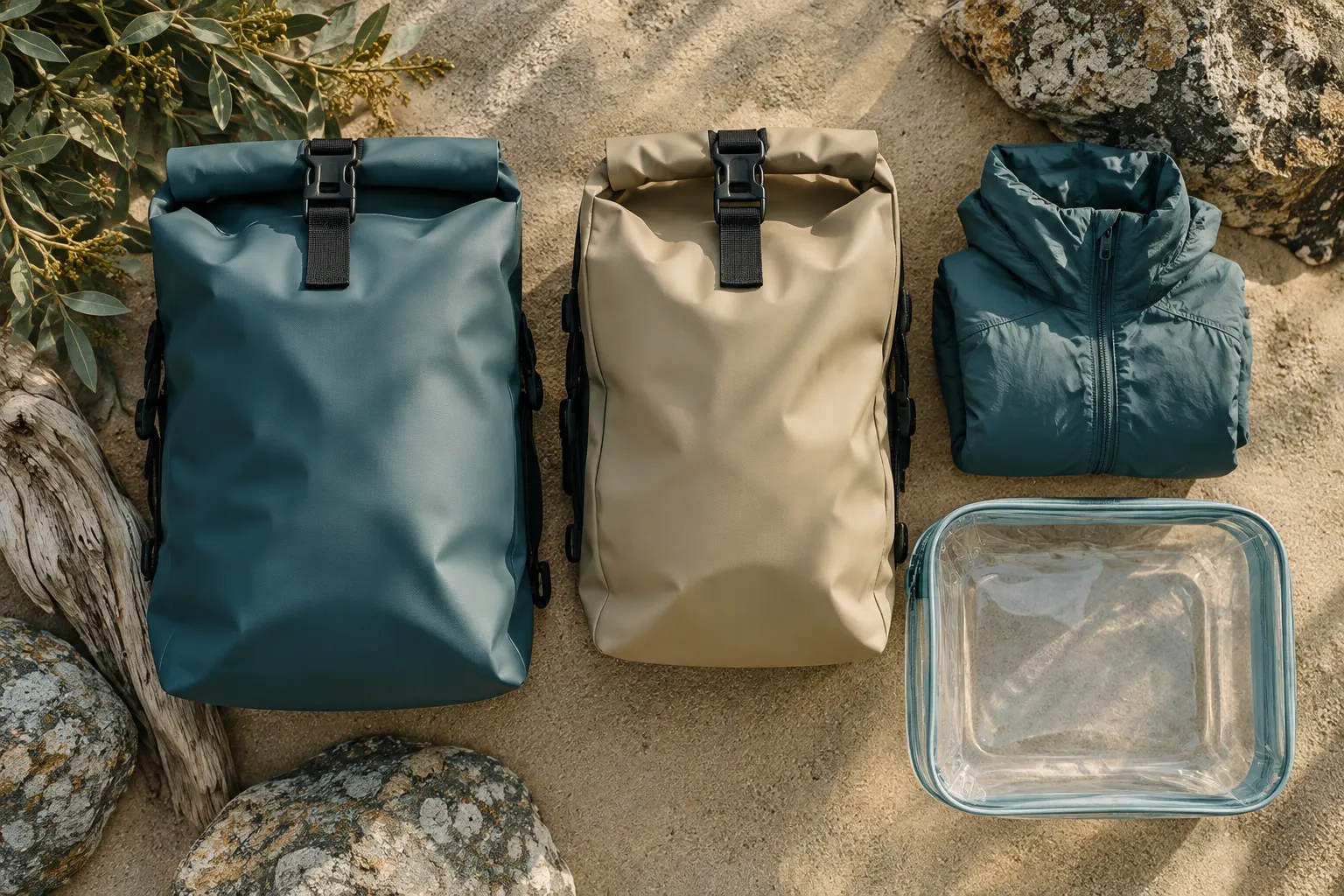
Litres answer only part of the question
A dry bag’s nominal litre volume does not describe the complete shape of the space available to a rigid item. Read the stated capacity alongside the base dimensions, closure arrangement and height under the manufacturer’s stated condition. A rolled top consumes part of the bag’s length, and a soft oval bag should not be modelled as a perfectly usable rectangular box. Start a shortlist with the exact product and size, not colour or a family photograph. Ask the supplier about any dimension that is missing from the relevant variant. Keep the intended use and the protection limitations visible rather than choosing a larger-looking number as a complete solution.
Sea to Summit AU Evac Dry Bag dimensions ?
Read a dated manufacturer example
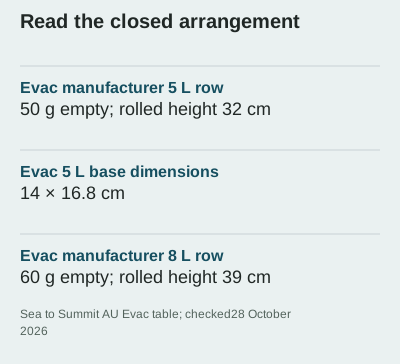
Sea to Summit Australia’s Evac Dry Bag table lists the 5 L size at 50 g, with a height of 32 cm when the top is rolled three times and a base of 14 × 16.8 cm. The 8 L row lists 60 g and a rolled height of 39 cm. These manufacturer specifications were checked on 28 October 2026; they are not our measurements of a loaded sample. Preserve the rolled-height condition beside the value. A photograph of an upright open bag may show a taller shape, but that does not replace the manufacturer’s stated closed arrangement or establish how a specific rigid item will sit inside.
Record the contents as real objects
Write down the dimensions and character of the actual items: a folded soft layer behaves differently from a rigid box with corners. In a fictional record, a case measures 18 cm long, 12 cm wide and 6 cm high. Those entries alone do not confirm that it passes the bag opening or allows the specified closure. Avoid multiplying the three numbers and comparing the result with a litre label as a fit approval. Inspect the actual arrangement where possible, follow the maker’s closure instructions and ask the supplier about uncertain items. Do not force sharp corners against the fabric merely to reproduce a tidy packing photograph.
Keep carried weight separate from volume
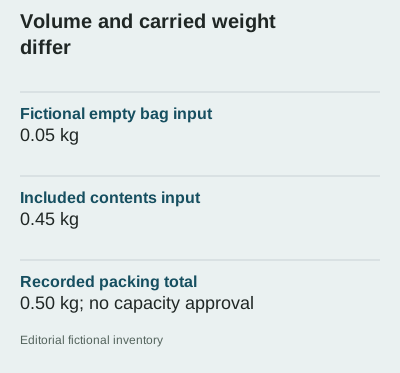
The bag’s empty weight and its nominal capacity belong in different fields. In a fictional packing inventory, a 0.05 kg bag plus 0.45 kg of explicitly included contents totals 0.50 kg. That arithmetic does not determine how much the bag should hold or establish flotation, carrying strength or suitability for immersion. Measure the completed arrangement if the weight matters to your inventory, and record anything excluded. A lighter empty bag is not automatically better for every material or use. Compare the documented construction and intended application alongside the actual dimensions, leaving questions about wear, abrasion or protection to the applicable product guidance.
Preserve the protection boundary
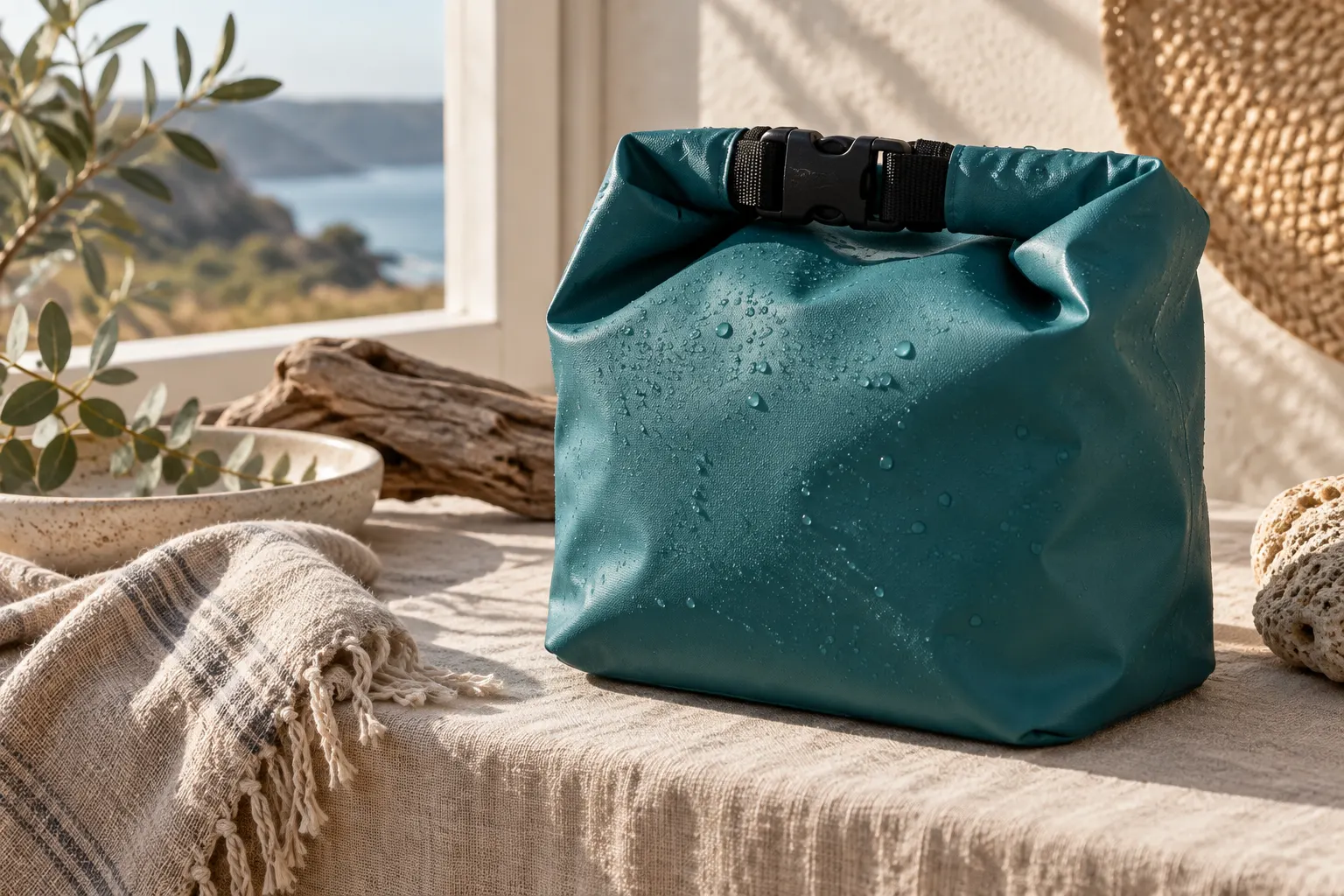
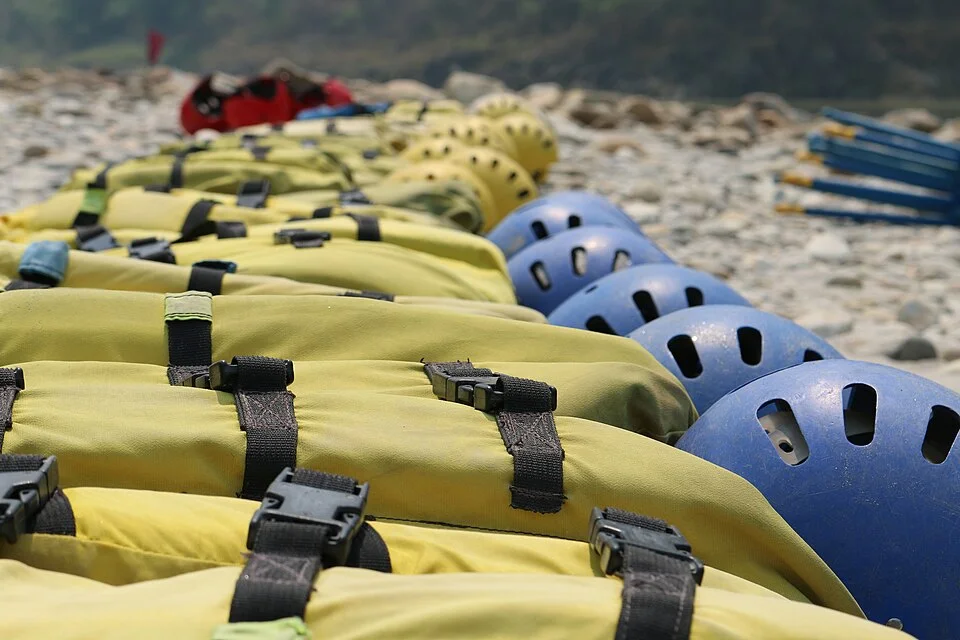
The Evac product page states that water can seep through a roll-top closure during submersion, even though the body fabric has a stated waterproof rating. Therefore the bag-size comparison must not become an underwater protection or buoyancy guarantee. Keep sensitive-item protection questions separate and seek product-specific advice. Our figures preserve the manufacturer’s size headings and show one fictional weight addition; neither proves that your case fits. Actual photographs provide broader equipment context and are not photographs of the named Evac sizes. Save the exact size, dated source and seller clarification with your order, then update the contents record when the packing arrangement changes rather than treating the original litre label as a permanent fit certificate.