Record kayak dimensions before planning storage
Separate the manufacturer’s named configuration from the full envelope that your actual storage arrangement needs.
Updated:

A storage comparison begins with configuration
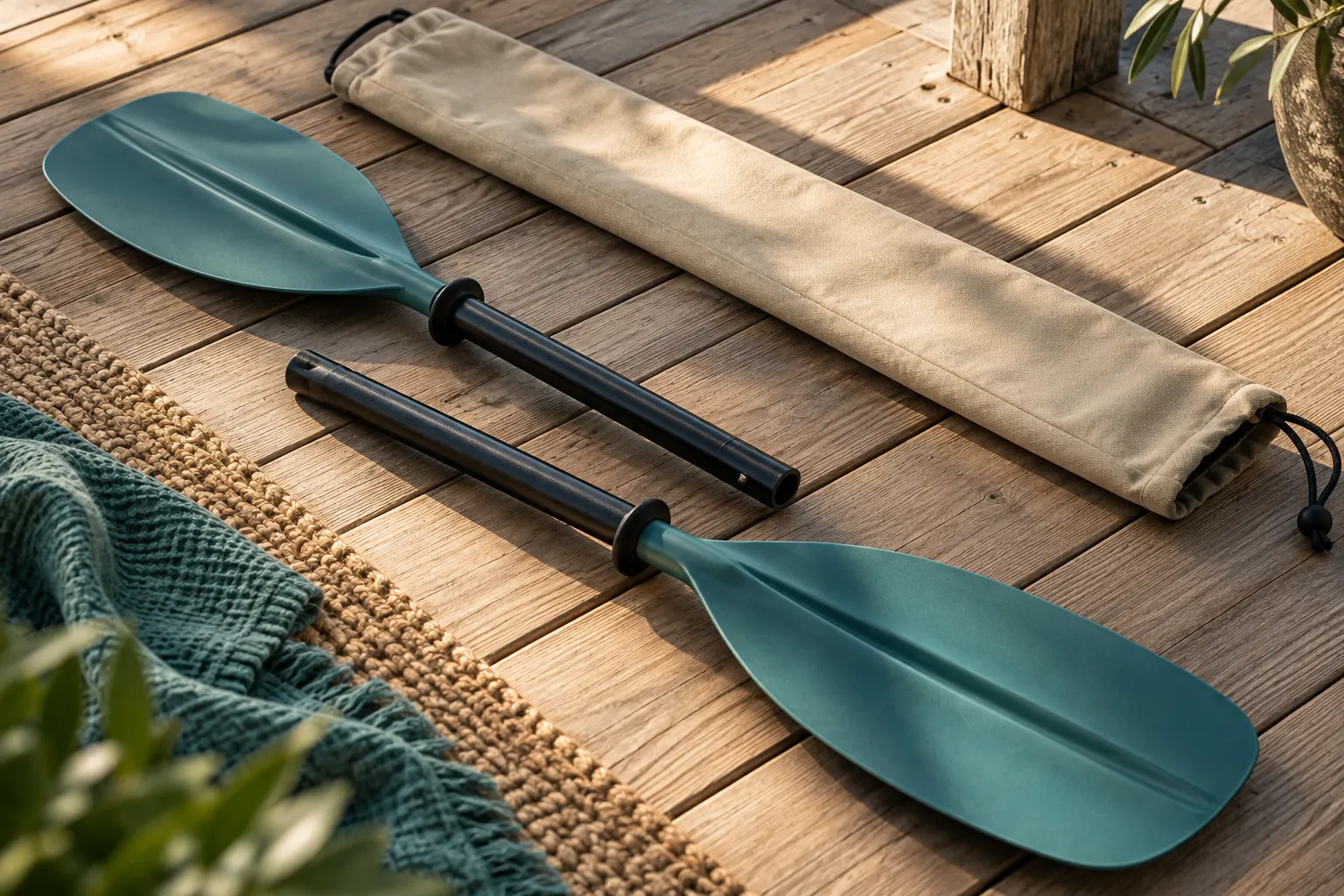
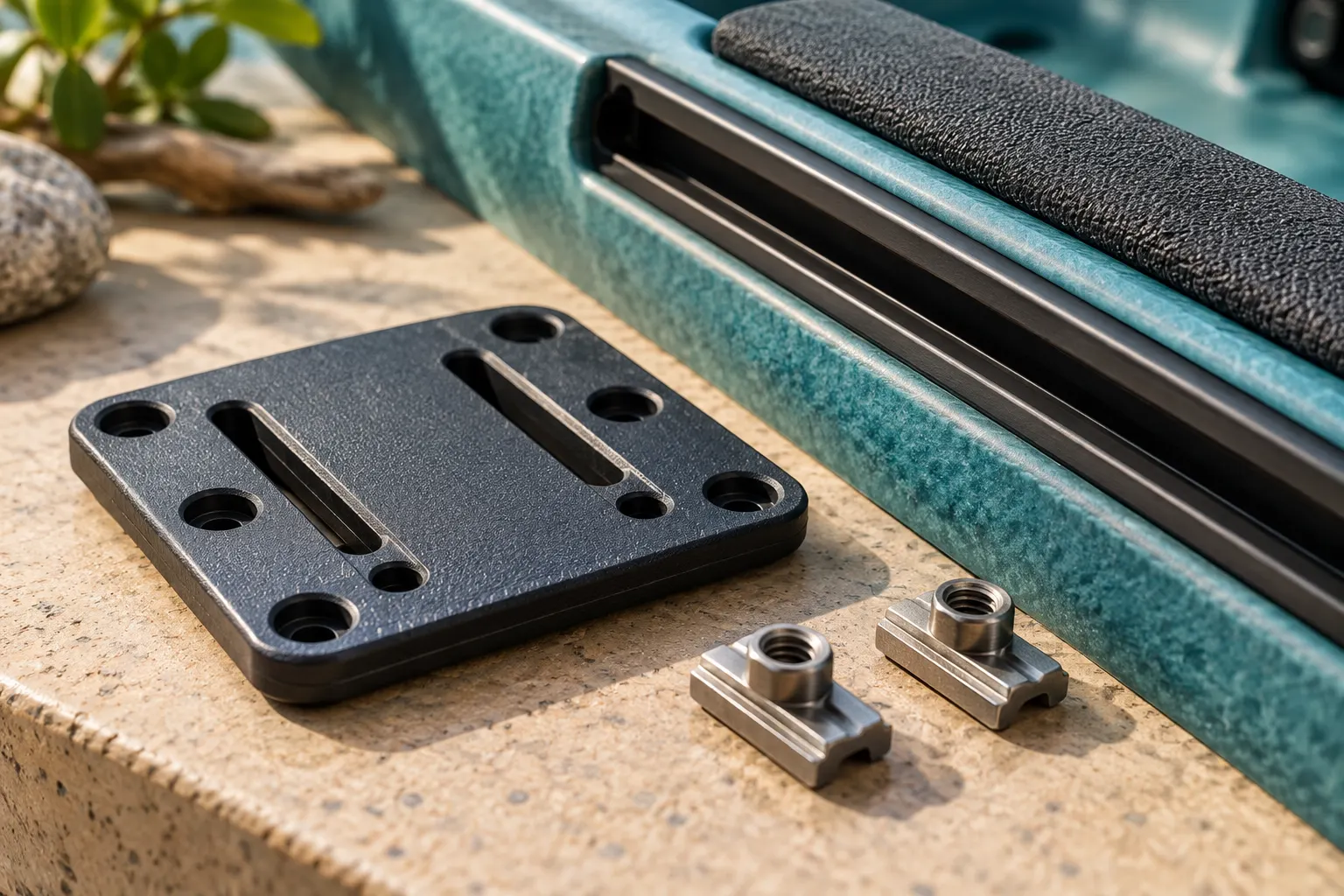
A kayak’s listed length and width are useful starting fields, but a storage decision needs the actual configuration you intend to keep. Identify the exact model, year where stated, and whether a measurement describes the hull alone or equipment attached. Record removable seats, drives, handles and accessories separately. Hobie’s Asia-Pacific Passport 12R page illustrates why the arrangement matters: its feature list includes accessory tracks, a hatch, rod holders and a supplied paddle. That list does not establish the dimensions of every assembled storage arrangement. Ask for the applicable manufacturer specification and measure the actual envelope before buying a rack or assuming a cupboard, garage or doorway will accommodate it.
Hobie Asia-Pacific Mirage Passport12R product arrangement ? NIST exact international length factor ?

Give every dimension an endpoint
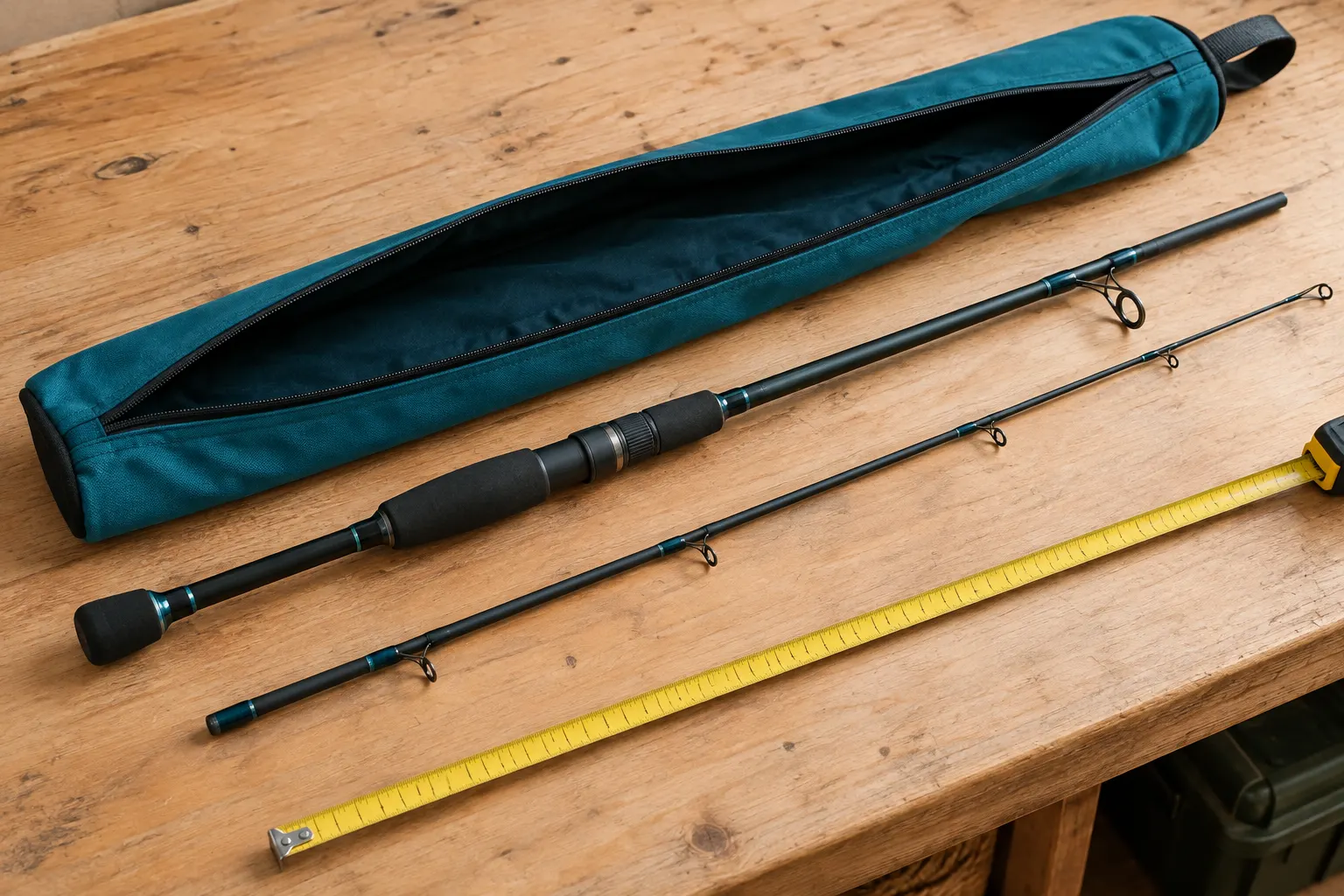
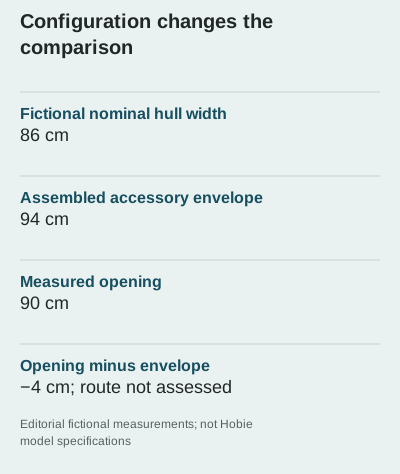
Use a drawing or photograph to identify where each measurement starts and ends. In a fictional record, a hull is entered as 360 cm long and 86 cm wide, while the intended assembled arrangement reaches 94 cm across its widest attached accessory. These are illustrative inputs, not Passport 12R specifications. A 90 cm opening compared with the 94 cm entry gives a negative 4 cm difference in that stated direction. It does not determine whether some rotation or disassembly is appropriate. The route, handling method, other dimensions and equipment instructions remain unassessed. Preserving the endpoints prevents a nominal hull width from quietly replacing an assembled measurement.
Keep weight categories in separate rows
A manufacturer may distinguish a hull weight from a fully equipped weight. Preserve the exact wording and what is included instead of choosing the smallest number for every purpose. If you weigh equipment, record the real arrangement and measurement method; do not create an assembled figure by adding uncertain accessories to a rounded hull claim. Our four-line weight tool simply adds entered weights and has no kayak-capacity, stability or handling model. Storage-support design and placement also need the relevant equipment instructions. A numerical total should therefore lead to an appropriately bounded question for the maker or supplier, rather than a conclusion that a particular rack or person can handle the load.
Check the whole storage route
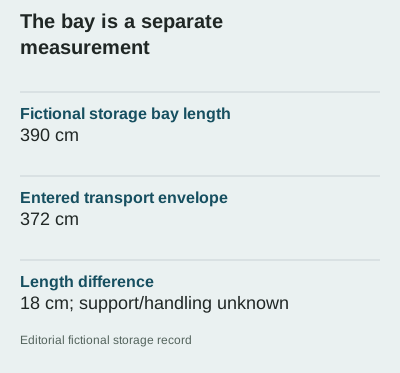
Measure the available route as its own record: doorway, turn, height restriction and final location can be different constraints. Keep the measured opening clear of temporary clutter while taking the measurement, and record whether a dimension was estimated. In a fictional example, the storage bay is 390 cm long and an entered transport envelope is 372 cm long, leaving an arithmetic 18 cm difference. That one field does not assess support points, access, ventilation or handling clearance. Do not improvise lifting or restraint instructions from this comparison. Ask the equipment supplier for the applicable storage guidance and obtain suitable help where moving or supporting the craft is uncertain.

Make uncertainty visible before payment
Send the seller a short list of the exact dimensions and configuration you still need confirmed. Ask whether their figures include the parts shown in the offer, and retain the response with the model code and date. If only a nominal length is available, label the storage envelope as unconfirmed. The figures below use fictional numbers to explain the record; they do not provide dimensions for a named kayak or approve a storage arrangement. Actual photographs show paddling and equipment context without establishing fit, safety equipment, local compliance or operating conditions. A useful final file preserves the manufacturer’s original terms alongside your own measurements, so future changes do not turn an old assumption into a current specification.
Open official source ? Open official source ?