Paddle length and packed sections belong on one record
Preserve assembled length, longest separated piece and included sleeve as different measurements when comparing paddles.
Updated:
Record what the length label describes
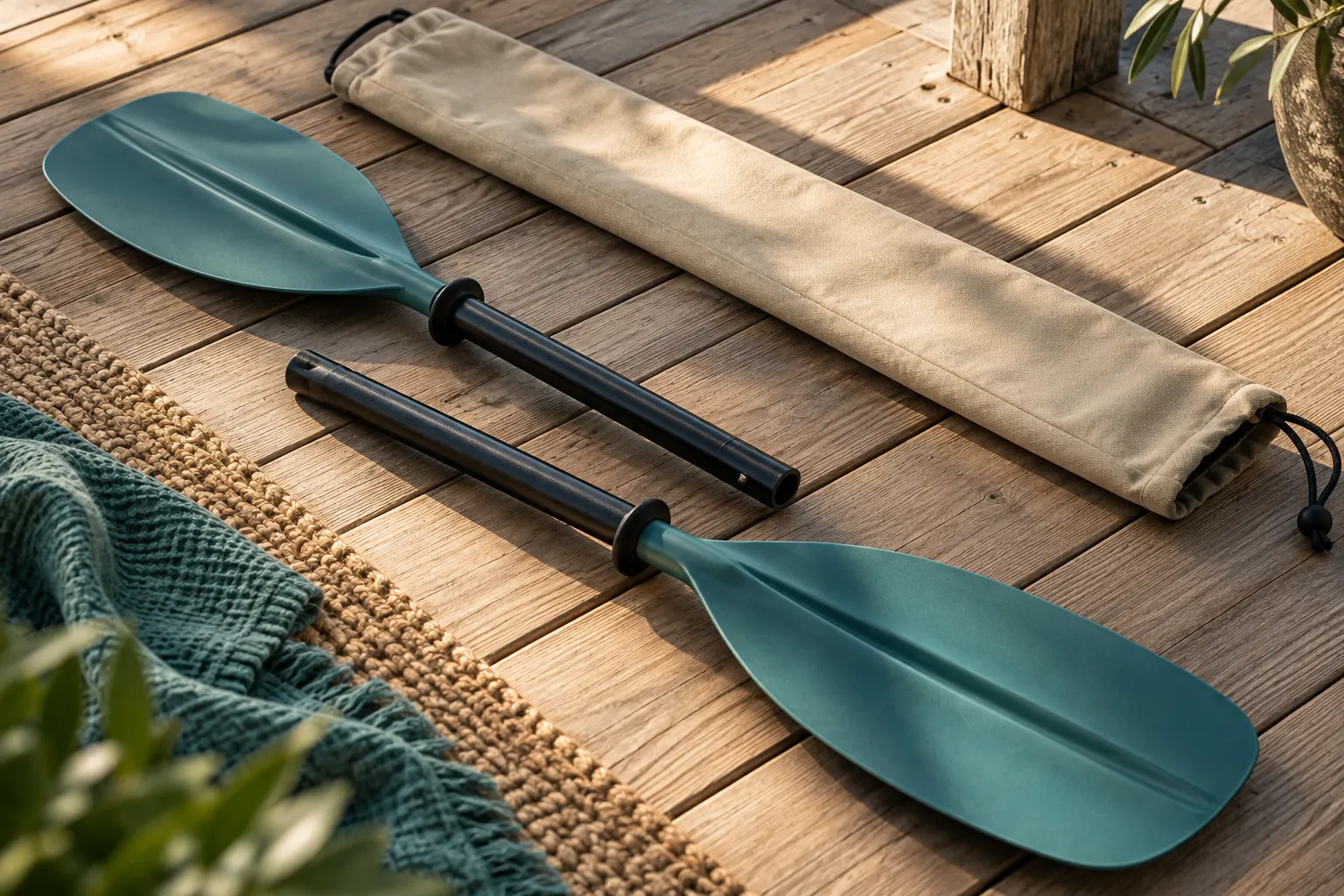
A paddle’s assembled length is not its packed length, and neither alone selects a suitable paddle for a person or craft. Start with the exact product and the manufacturer’s description of its construction. Hobie’s regional Passport 12R feature page lists a two-piece aluminium paddle as supplied equipment, but that statement does not establish the length of every replacement or the packed envelope of a different paddle. Ask for the applicable model information and preserve the original units. Treat adjustment ranges and sectional construction as separate fields. A listing that says adjustable or two-piece without identifying the relevant dimensions leaves a practical purchase question open.
Hobie Asia-Pacific Mirage Passport12R product arrangement ? NIST exact international length factor ?
Measure the actual separated arrangement
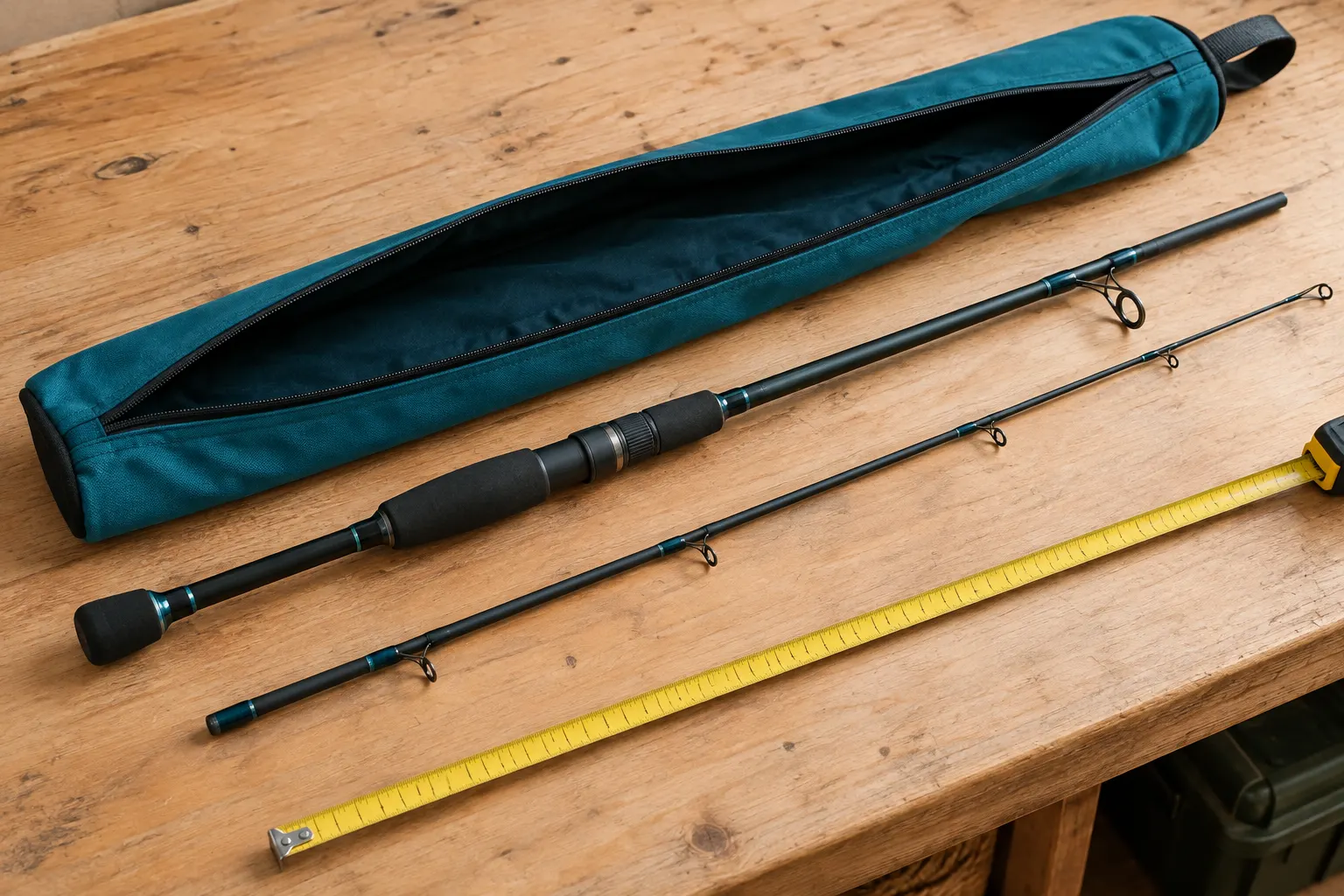
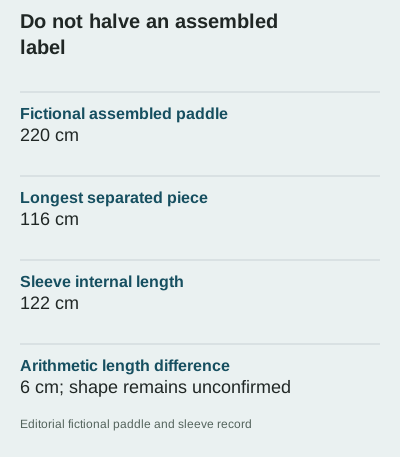
In an explicitly fictional example, an assembled paddle is recorded at 220 cm. The longest separated piece is measured as 116 cm and the sleeve’s internal length as 122 cm. Subtracting the last two figures gives a 6 cm length difference. The blade’s width, curvature, protection and closure clearance still need separate records. Do not divide the assembled length by the number of pieces to replace a real measurement; overlap and unequal components can make the calculation misleading. Keep the measurement method and person who supplied it with the number. If the retailer cannot confirm the separated dimensions, leave them unconfirmed before buying a restrictive case.
Preserve units without pretending to add precision
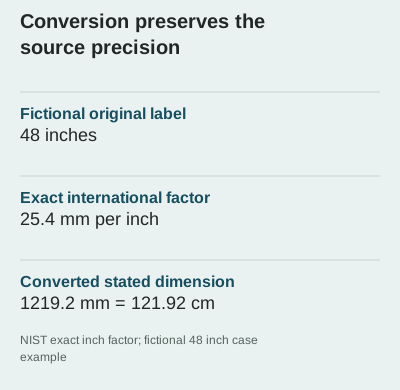
A unit conversion should retain the original stated value. NIST defines the inch as exactly 25.4 mm, so a fictional 48 inch case dimension converts to 1219.2 mm, or 121.92 cm. That exact factor does not mean the case was measured to hundredths of a centimetre. Keep the manufacturer’s rounding and any measurement tolerance visible where supplied. Distinguish internal usable length from external length: the latter may include end caps or protrusions that do not add usable space. Our length tool accepts centimetres and only subtracts the two entered lengths; it does not convert a published external dimension into an inferred internal one.
Identify the actual included parts
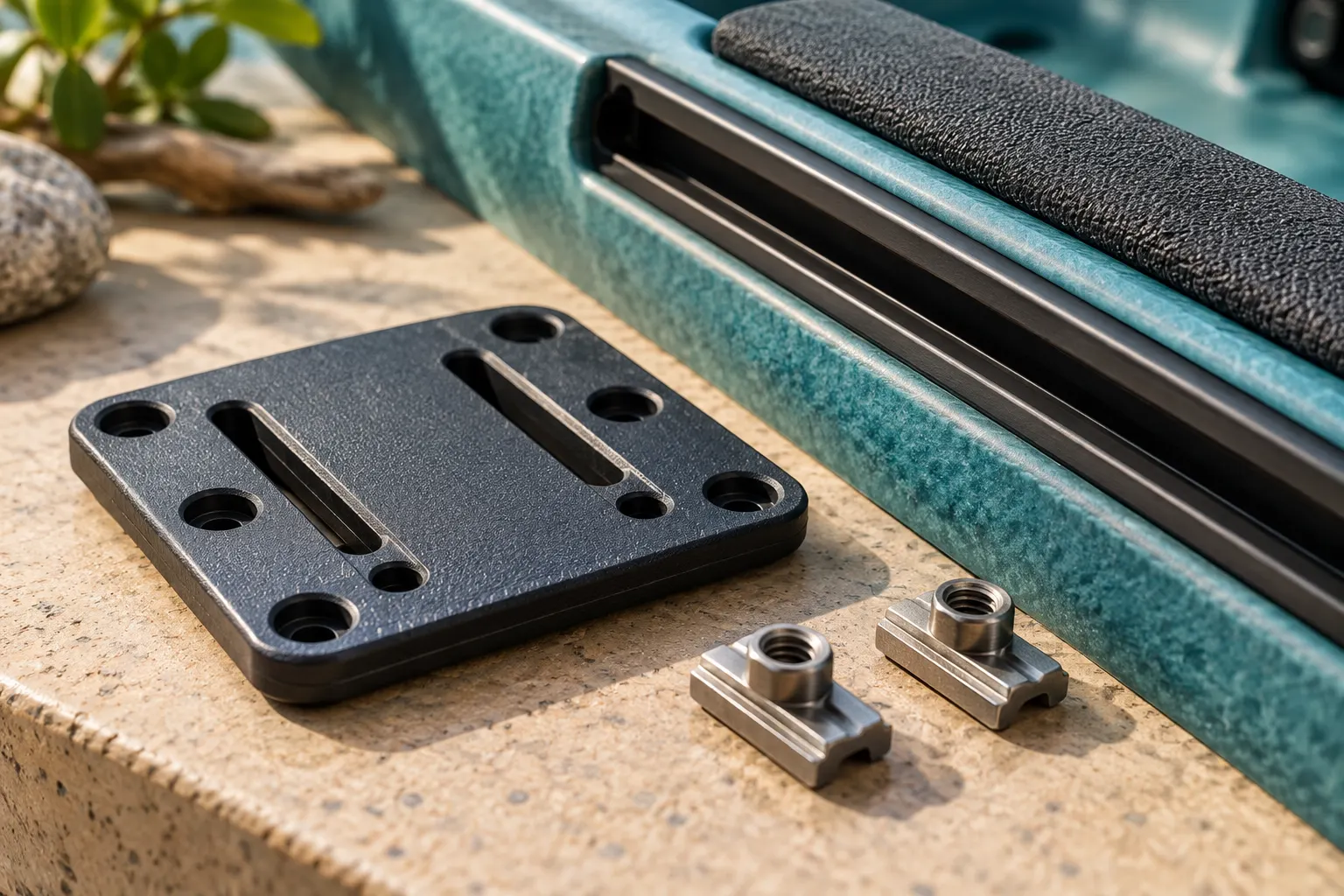
Ask the seller to list the paddle sections, connector components, sleeve and any other parts included in the offer. Follow the exact manufacturer’s instructions for assembly, adjustment and care; this record supplies no joining procedure or acceptable wear threshold. For used equipment, preserve visible condition observations and ask a qualified supplier to address uncertain joints or altered parts. A photograph can confirm that a piece appears in the listing, but it cannot certify its condition or compatibility. Keep the supplied-item list separate from an image showing optional accessories, and retain the response that identifies which exact paddle the seller will deliver.

Use the file for a bounded decision
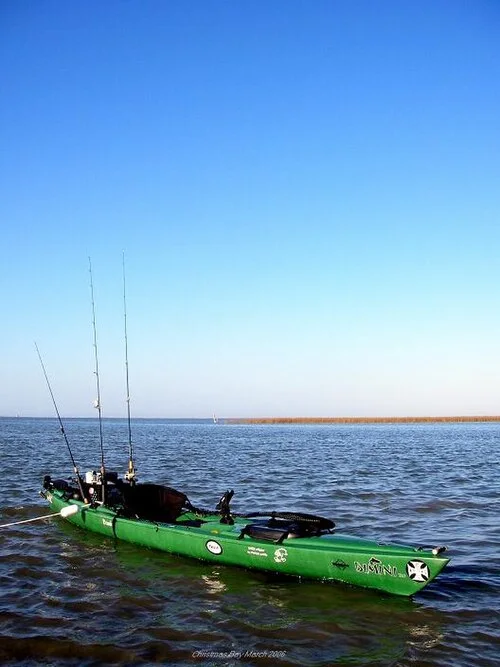
Compare two offers only after their construction, included parts and dimension headings align. A shorter packed arrangement may solve a storage question without establishing suitability on the water. Keep the separate fitting and use questions for the equipment manufacturer or qualified provider, with the person, craft and conditions appropriately considered. The numerical figures here are fictional recording examples rather than recommendations for a paddle length. The activity photograph is contextual and does not demonstrate the correct equipment, clothing, safety provision or technique for an Australian trip. Preserve your final model-specific record with the receipt and update it when a component changes, so the old assembled length is not silently assigned to a new arrangement.
Open official source ? Open official source ?